


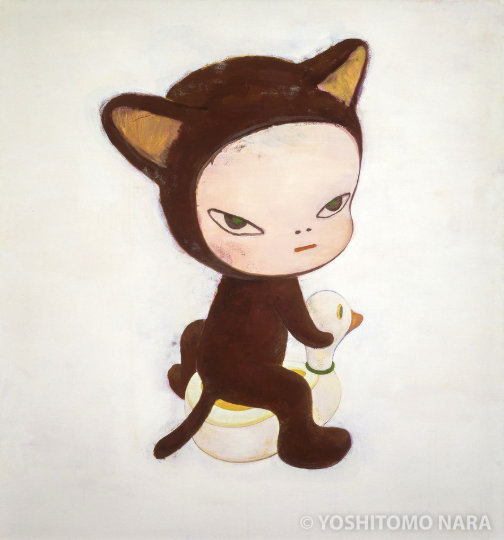
Japanese artist Yoshiomoto Nara, journalistically described as a “pioneering figure in contemporary art,” produces pop art and superflat works that are quite extraordinary. His art, often depicting simple, cartoon-like characters, with wide doll-like eyes and large heads, is deceitful: they initially appear as “cute,” but truly capture intense and deeper feelings that Nara intends to convey. His art is meant to express how childhood is a matter of complexity, with surfacing themes of innocence and vulnerability that juxtapose with rebellion. Yoshimoto often describes his works as capturing everything his soul bears to hold on to – memories, music, literature, conversation. All of these have contributed to a sense of curiosity that is developed within his paintings, celebrating the individuality of the imaginative mind.
After graduating from Aichi University of the Arts in 1987, Nara decided to continue his studies at the Kunstakademie Düsseldorf from 1988-1993, and settled in Cologne in 1994. This was extremely influential in Nara’s art as he began to combine elements of both Japanese and Western culture into his art. Because of this experience, Nara deliberately confronts cultural backgrounds and language barriers, while touching on themes of isolation similar to the ones he experienced himself. Some works he created during that period of time include the Nachtwandern (1994) and Haze Days (1998). In 2000, Nara returned to Japan and produced a formative exhibition called I DON’T MIND, IF YOU FORGET ME, which included a wide range of his works, the most prominent being the Fountain of Life (2001) and the Time of My Life (2001). In 2020-2021, LACMA (Los Angeles County Museum of Art) produced Nara’s first major international retrospective, accounting for more than 30 years of his art, with over 100 pieces.
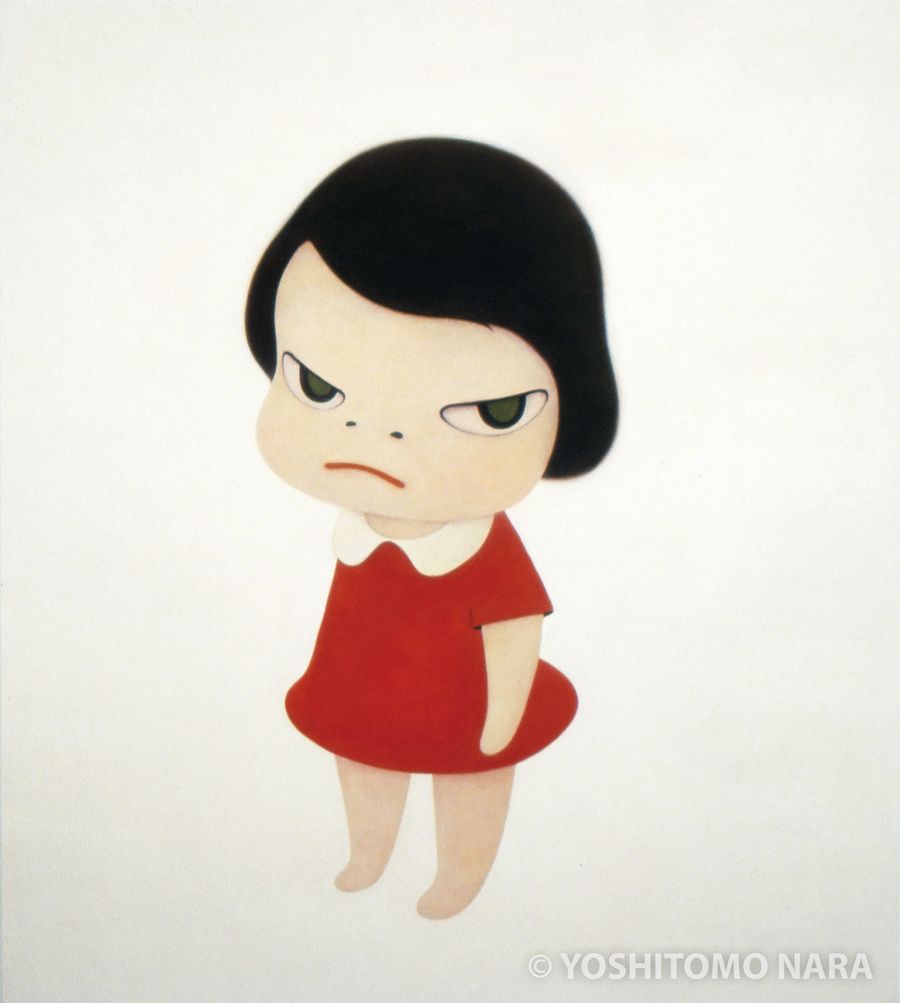
To craft paintings with such emotional depth, the color and compensation based on painting theory are huge contributors to the dynamic of his works. When it comes to areas of drawing, Nara uses materials that feel familiar to him, such as torn-off note paper or pursed envelopes. Nara’s depiction of eyes on his characters is arguably the most critical element in conveying something decidedly meaningful. Though his characters often portray a simple outer appearance, the eyes reveal some type of inner emotion, most often sadness, boredom, anger, isolation, or defiance, though we can also interpret it as innocence or curiosity
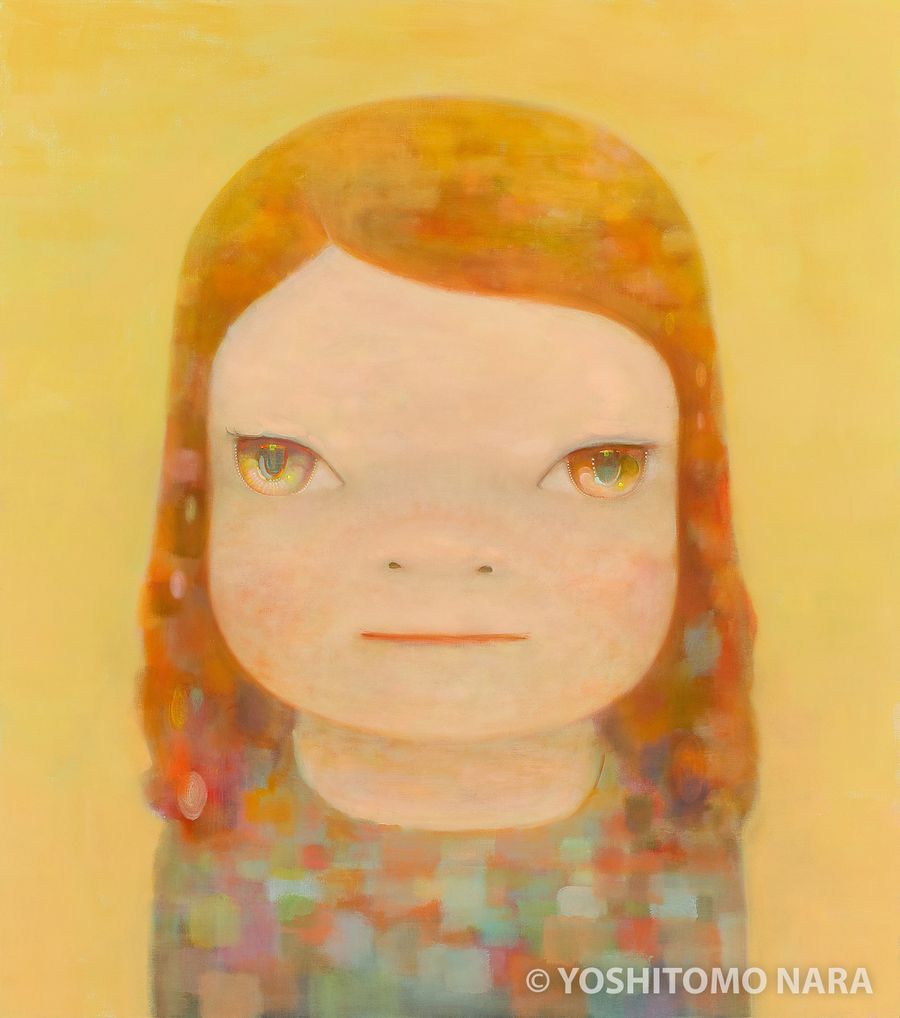
All in all, his paintings succeed in reflecting expressions of how these characters truly feel. His paintings also tend to convey cultural, political, and rebellious themes, reflecting experiences of growing up in punk rock and growing up in post-World War II Japan, and further highlighting the horrors children are forced to endure.