

Music has undoubtedly always been political. It is not always meant to make the listener comfortable; sometimes it is supposed to enrage them. This can largely be attributed to the fact that when society suffers, resistant writing and auditory imagery can turn pain into purpose. From Beethoven’s era to the 20th century, art has consistently reflected its external environment, especially amid consequential socioeconomic crises. Music was a tool during the Civil Rights Movement, a symbol of defiance during the Vietnam War, and now a solemn testament to the past, calling to us that its tragedies and failures must not repeat.
Contemporary rock band The Strokes understood that the severity of America’s foreign policy must not be neglected, and what better stage to garner attention than the nation’s most profitable music festival?
Originally from New York City, The Strokes formed in 1998, helping to shape the sound and look of alternative rock in the modern era. Although they started nearly three decades ago, their notoriety has not even begun to stunt because of their timeless, unique tunes. Their 2020 album The New Abnormal features their most popular song, “The Adults Are Talking,” which, notably, critiques the controlling and abusive nature of higher authority, whether in business, politics, or elsewhere. With nearly 800 million streams, this song indicates that a palatable, muted style is not a requirement for mainstream success, challenging conventional industry assumptions that art must always be digestible.
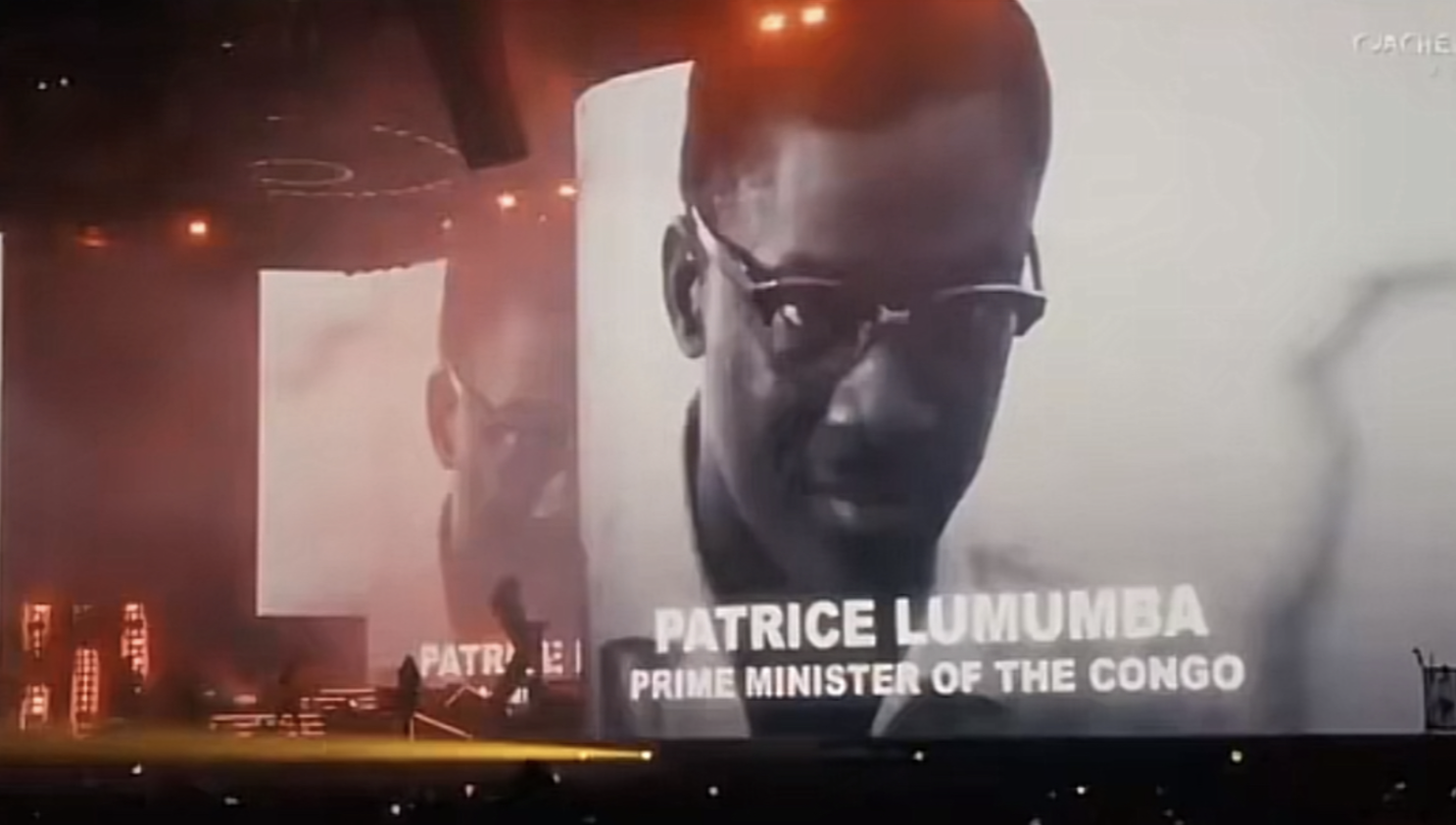
In front of tens of thousands of fans, the band concluded their Coachella weekend 2 set with their song “Oblivius.” What was projected on the giant screens? — a montage of injustices perpetrated by the American government and the CIA. Imagery depicted a pattern of world leaders overthrown with CIA-proven or suspected aid, including Guatemalan President Jacobo Árbenz in 1954, Congolese Prime Minister Patrice Lumumba in 1961, Chilean President Salvador Allende in 1973, and Bolivian President Juan José Torres in 1976. Also amongst this list was Iranian Prime Minister Mohammad Mossadegh, a democratically elected figure (and my grandfather’s first cousin) whose progressive, Iran-first economic policies resulted in abrasive Western interference. The Strokes called out the irony of a country rooted in the Monroe Doctrine infecting Latin American, African, and Middle Eastern countries with its unwanted, destructive intervention.
Additionally, the production featured an image of Martin Luther King Jr., with the words, “US Government found guilty of his murder in civil trial.” This is in reference to a 1999 trial in which it was unanimously decided there had been a government conspiracy to assassinate the Civil Rights leader. His death in 1968 came after years of surveillance by both the FBI and the CIA. However, the U.S. government’s abetting of his assassination has never been proven.
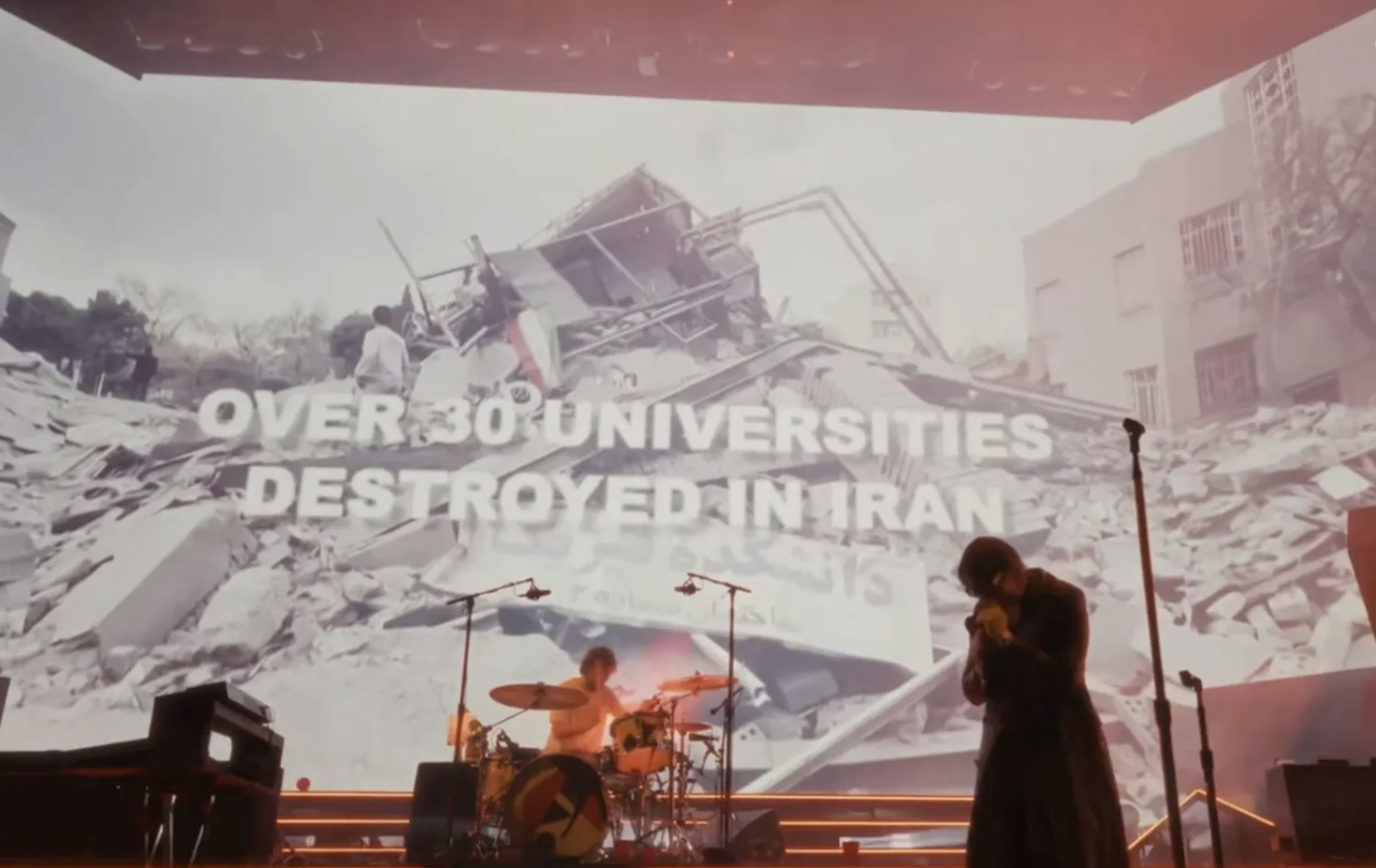
To conclude, the montage displayed images of a destroyed Iranian university in rubble as a result of U.S.-Israeli airstrikes earlier this year. As in the past, the American government has justified its involvement by claiming that its foreign presence is for regime change and diplomatic cooperation. However, it has amounted to less change and more massive destruction, specifically targeting oil and civilian infrastructure. While sources cite that 66% of Americans disapprove of the war, public response has been relatively passive compared to that of previous wars. Thus, Casablancas sought to change this.
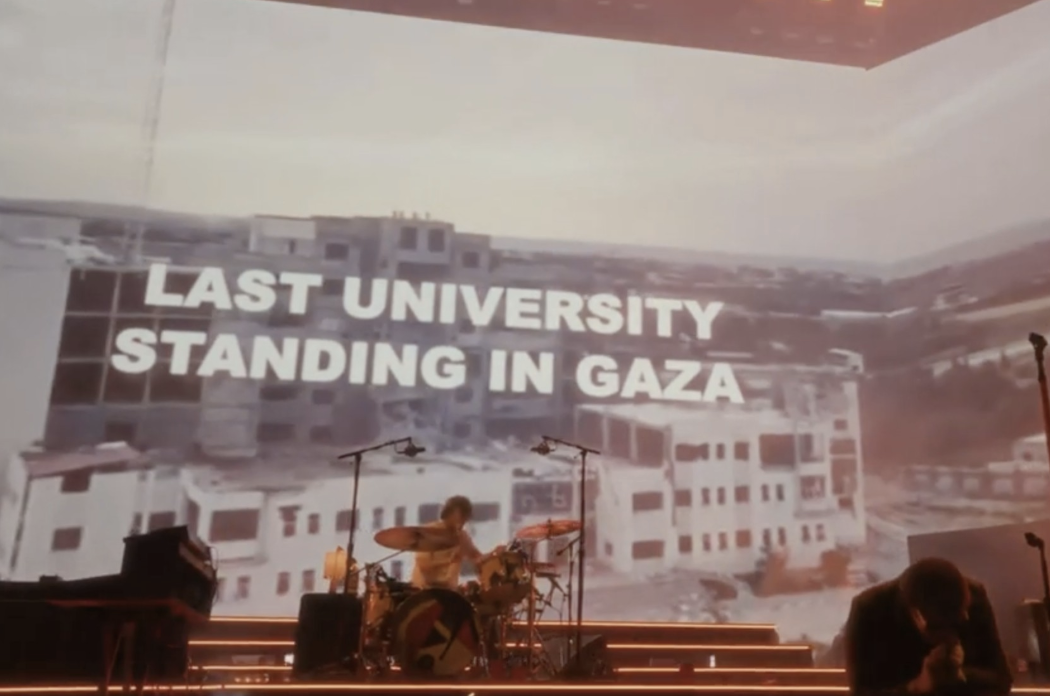
The band’s projection was followed by footage of the demolition of al-Israa University in Gaza, its last standing university, before Israeli forces destroyed it in 2024. In what has been an ongoing conflict lasting over a century, Israeli Prime Minister Netanyahu has recently escalated attacks on the Gaza Strip and Rafah, resulting in catastrophic devastation. Behind these two images is also an ongoing campaign against violence across the entire Middle East, with Arab nations like Lebanon, Saudi Arabia, and Iraq caught in the crossfire.
Clips of the Strokes’ performance spread across the internet quickly, with one clip surpassing 5.1 million views on X (formerly Twitter) overnight. Though it was not the only musician’s sentiment to mobilize the Coachella audience this year, Casablancas’ was the most direct and widely shared via social media. It represents the idea that artists are and have always been provocative, defiant against the corrupt. In the face of oppression, discrimination, and other forms of maltreatment, silence is widely perceived as one of the most dangerous threats to liberty. So the change that artists drive is often measured not by their silence but by their words, and when words fail, there will always be the music.
Curating each chord and melody, and combining them with reason and meaningful speech, is like a science in itself, stemming from the intent to better understand and improve our world; yet music has its imperfections, which, in turn, make it more personal, more human. The most brutalized authoritative entities across the globe attack culture and the freedom of expression because they provoke the flow of ideas that confront what is permissible. So like a scientist, Casablancas’ visual and auditory curation welcomed history to condemn U.S. imperialism and war, which many would largely deem a disruption to a lively festival. However, some of the most impactful pioneers of perpetuating change through art, whether it be Bob Dylan or Joan Baez, might tell you otherwise. Because as they saw it, a call for justice, in any setting, was something that was always invited, a necessity given the context, because music has always been political. And although turmoil will resume, the chorus of “Oblivius” asks a crucial question; it calls us to reflect not just on our values but on our actions: “What side are you standing on?”