


Laughter? I hardly know her! Laughter is one of the few expressions of human emotion that is understood and recognized universally. It’s an indication of amusement that transcends the usual linguistic barriers presented by formal languages. It’s an action done so casually and commonly every day, with the average adult laughing around 17 times a day. But what is the science behind this seemingly simplistic gesture, and what health benefits has it provided humans with to have persisted millions of years of human history?
What Is Laughter and Why Does It Happen?
Laughter is a psychological response to humor that many researchers believe is related to making and strengthening human connection. Laughter itself is strongly dependent on social context, with people being up to 30 times more likely to laugh in a group than by themselves. Interestingly, studies found that dominant or authoritative individuals like bosses, family patriarchs or matriarchs, or tribal chiefs use humor more than their subordinates because controlling the emotional climate of a group is a way of exercising power, with the laughter produced being used as a way to deflect or pacify anger.
Currently, the relationship between the brain and laughter is not completely understood. Though certain parts of the brain are responsible for certain functions, like the frontal lobe with emotional responses, gelotologists – scientists that study laughter – have determined that laughter is involved in various regions of the brain. This is unlike what happens in the brain during emotional responses because emotional responses are confined to specific regions of the brain. During an experiment by humor researcher Peter Derks in which people subjects were hooked up to an electroencephalograph and had their brain activity measured as they laughed, the following results were observed:
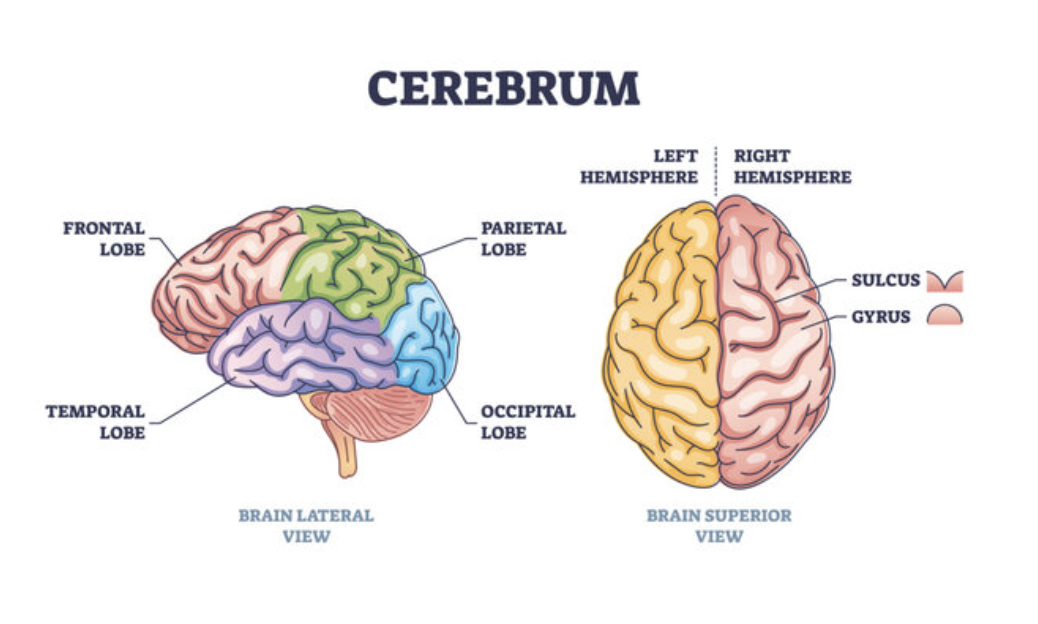
- The left cortex was responsible for analyzing the words of the joke being told.
- The frontal lobe became very active, which makes sense since it is involved in emotional responses.
- The right cortex conducted the analyses required to understand or “get” the joke.
- Motor sections of the brain triggered physical responses to the joke.
Because laughter seems to be produced through a circuit that goes through various regions of the brain, experts say that damage to any of these regions can impair one’s sense of humor and response to humor.
Benefits of Laughing
Relieves Stress: One of the most foreseeable benefits of laughing is stress relief. Activities like sharing funny moments with family and friends by sharing laughs lowers stress because laughing increases your brain’s production of endorphins. Endorphins are the good chemicals that relieve pain and reduce stress: they are your brain’s natural painkillers and stress relievers! Endorphins can improve mood and lower anxiety, contributing to feelings of calm and happiness.

Increases Oxygen Coming Into Your Body: Laughter brings your body a lot of extra oxygen, which decreases your heart rate and stimulates your parasympathetic nervous system. The parasympathetic nervous system is a network of nerves that relaxes the body after periods of danger or stress. When running on your parasympathetic nervous system, your heart rate lowers and you breathe more easily. In addition to stimulating your parasympathetic nervous system, increased oxygen also allows your body to think more clearly and positively and positively affects cognitive processing in normal adults.
Gives Laughers a Workout: Even though laughing can’t completely replace exercise, laughter can feel like or act like an entire body workout. According to researchers, laughing 100 times is equivalent to ten minutes on the rowing machine and fifteen minutes on the exercise bike. Laughter exercises your abdominal, diaphragm, respiratory, leg, facial, and back muscles, which is why people often feel sore after long bouts of laughter.

A little laughter can brighten up your entire day, so don’t be afraid to seek out the whimsy in life.
Sources:
https://science.howstuffworks.com/life/inside-the-mind/emotions/laughter.htm
https://www.psychologytoday.com/us/blog/the-sandwalk/202208/why-did-evolution-make-us-laugh
https://health.clevelandclinic.org/is-laughing-good-for-you
https://pmc.ncbi.nlm.nih.gov/articles/PMC4255480/
https://www.nuvancehealth.org/health-tips-and-news/your-brain-on-laughter
https://www.lybrate.com/topic/cerebrum-image
https://pmc.ncbi.nlm.nih.gov/articles/PMC4107523/
https://www.helpguide.org/mental-health/wellbeing/laughter-is-the-best-medicine