


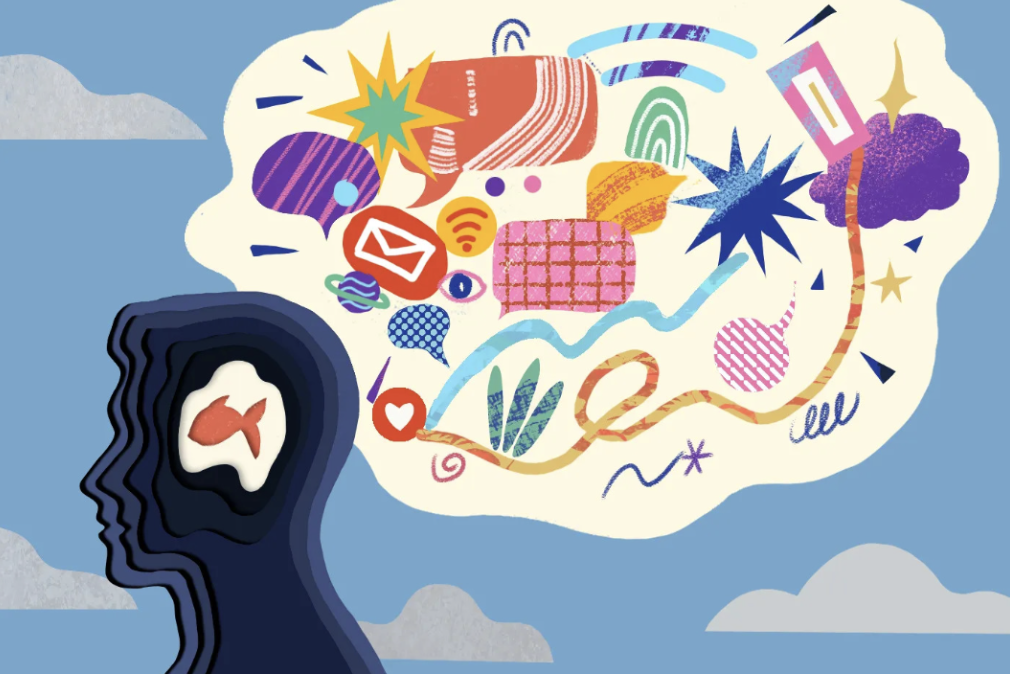
With the dawn of the internet and new technology, it feels like everything is clamoring for our attention. You see electric billboards that change advertisements every few seconds on your commute to school or work. You get dozens of notifications each day. Streaming services recommend a countless number of TV shows and movies. And let’s not forget the device that has made finding entertainment as easy as one swipe of the thumb: your phone. No matter where you go, there’s always a screen nearby that’s trying to get you to click or scroll or purchase something. In a world where we are constantly shown new content and information and advertisements, what can we do to prevent our brains and attention spans from being worn out?
How Are Our Brains Dealing With the Digital Era?
The human attention span today is eight seconds, one second less that of a goldfish.
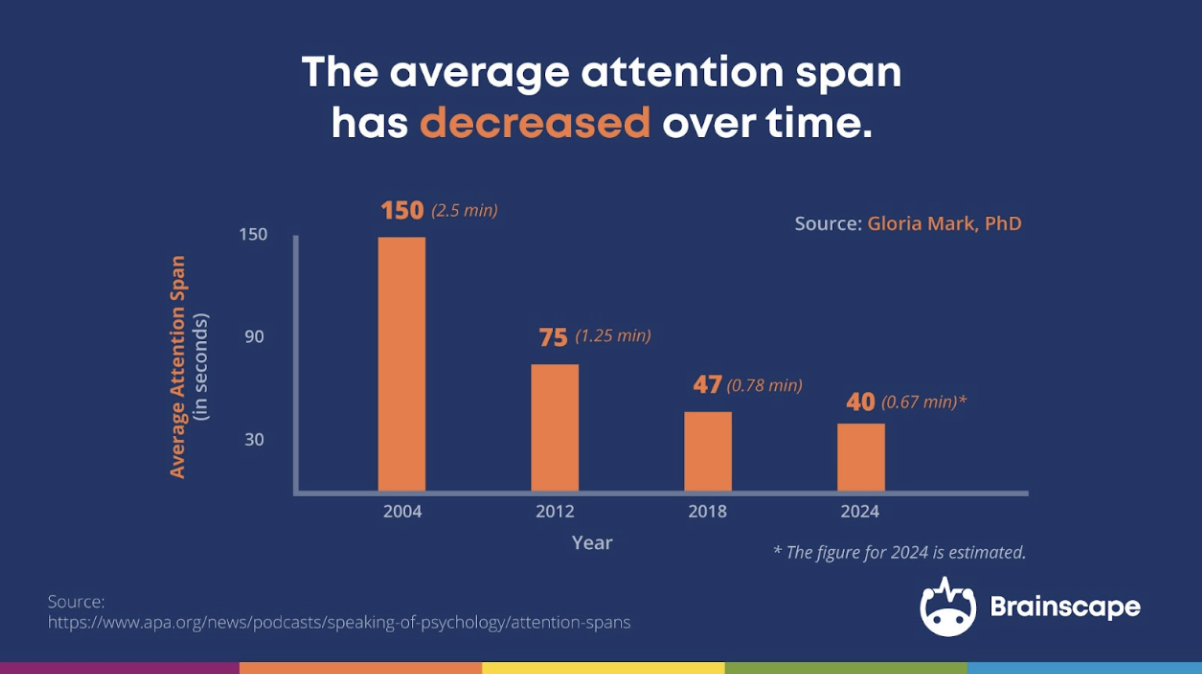
Pretty much everyone has heard some version of this. Now, while the claim is false, it’s true that attention spans have been shrinking over the past decades. A study conducted by Gloria Mark, a PhD holder and chancellor’s professor at the University of California, Irvine, found that in 2004, the average attention span on any screen was two and a half minutes. In recent years, she’s found that it’s decreased to around 47 seconds on any screen.
Now, it’s natural for a person’s attention to shift from time to time. According to research from the University of Rochester, people’s attention runs on a cycle that shifts around seven to ten times per second. This rhythmic refresh of our attention can be helpful and may even be crucial for survival because it prevents us from being too fixated on one component of our environment. But in modern times, these windows that shift our attention make us more susceptible to distractions. Our brains use filters to process information; enhancing the important information while suppressing distracting information. Things like modern screens and notifications intensify short attention spans because constant digital input overstimulates your brain’s processing capabilities. We just can’t process all this information at once.
How Can I Improve My Attention Span?
Our society’s regression when it comes to attention may be concerning, but hope is not yet lost! Here are some ways you can improve your attention span:
01. Reducing Distractions
As I’ve stated before, the constant distractions of the modern world can be a detriment to humans because our brain frequently creates opportunities for attention shifting. When you are trying to complete work that does not require a device like your laptop, disconnect from the internet. Turn off your phone and leave it somewhere out of sight. I know the idea that in order to stop getting distracted you need to get rid of distractions seems obvious, but it’s worth pointing out because doing these simple things can really help boost your productivity.
02. Schedule Breaks
Your brain gets fatigued after trying to focus for too long. When you’reworking or studying, planning out times for breaks helps ensure that your brain is able to rest and process all the information that it is being given. Having shorter study sessions with periodic break is so much better for your attention span and your brain than powering through all your assignments in one sitting.
03. Stop Multitasking
While it is often seen as the pinnacle of productivity, most of the time multitasking only strains your attention. According to Brown Health University, humans are “monotaskers.” We’re meant to focus on completing one task at a time, and multitasking makes us more prone to errors. Individuals that regularly use multiple devices simultaneously (i.e. watching TV while using a tablet) are more likely to show poorer attention when it comes to cognitive tasks. Avoid frequently switching between tasks, and your brain will thank you.
While algorithmic recommendations, short form content, and annoying notifications have made it difficult to concentrate on tasks in the modern world, there are still ways we can overcome these inconveniences and exercise our brains in ways that don’t overwhelm them. Not everyone’s attention span is fried. Look at you! You’ve just finished reading a 700-word article.
Sources:
https://law.temple.edu/aer/2024/01/06/are-we-no-better-than-goldfish/
https://www.apa.org/news/podcasts/speaking-of-psychology/attention-spans
https://gloriamark.com/attention-span/
https://www.urmc.rochester.edu/news/publications/health-matters/how-to-increase-attention-span
https://www.urmc.rochester.edu/news/publications/neuroscience/frequently-distracted
https://www.brownhealth.org/be-well/multitasking-and-how-it-affects-your-brain-health
https://www.brainscape.com/academy/top-students-increasing-attention-span/
https://news.northeastern.edu/2024/01/23/decreasing-attention-span/