


What Is a DEI Initiative?
Before we dive into the pros and cons of DEI initiatives, we need to first understand what a DEI initiative is. DEI initiatives are actions that organizations take to promote diversity, equality, and inclusion in their workspaces. The goal of diversity is to diversify the population of a workspace by promoting variety in the races, ethnicities, religions, socioeconomic statuses, genders, and other identities and backgrounds of the individuals a part of that population. The goal of equality is to ensure that opportunities and resources are made available to all members of a community regardless of anyone’s identity or background. The goal of inclusion is to ensure that everyone in a diversified workspace feels respected and welcomed. These three values are interdependent and rely on organizations to uphold each value in order to have successfully fulfilled a DEI initiative. What is the point of a diversified workforce if minority groups are being paid less than average? What’s the point of having a work environment in creative fields where everyone is always completely satisfied because they are always surrounded by like-minded people? DEI programs, which were the result of societal movements and legal changes, first emerged in workplaces during the mid-1960s in order to promote integration in workplaces. DEI initiatives have continued evolving over the years and have grown to include: Inclusion and Diversity Training, Employee Resource Groups, and Changes in Recruitment and Hiring Practices.

On paper, DEI initiatives are great ways to promote inclusivity in communities, workplaces, and other workplace-adjacent environments. But what are the underlying implications of DEI initiatives in workspaces, and do the initial values of these programs become diluted by the profit-driven values of corporations?
Cons of DEI Initiative and Reasons Why Some Fail
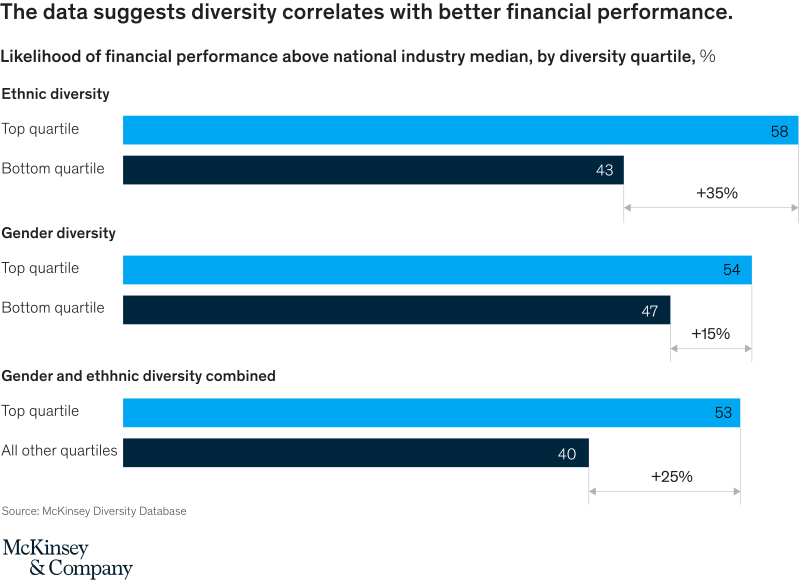
Many DEI programs in corporations fall short of their intended purpose. Though some cases of failing DEI initiatives are attributed to factors such as the lack of accountability in leadership, miscommunication, or low employee engagement, the main reason that these initiatives fail is because they emphasize addressing behavioral issues instead of the mindsets of their employees. Many of these companies’ failing initiatives approach DEI by solely focusing on ratios in order to display their diversity and simply dictating right and wrong actions in DEI training. Many corporations jumping on the DEI bandwagon are simply looking to increase profits. A study conducted by McKinsey & Company showed that companies that were in the top quartile for gender and ethnic diversity were 25% more likely to do better financially than companies not in the top quartile. When corporations notice studies like this, DEI initiatives become all the more appealing primarily because corporations see them as easy ways to reap the financial benefits. What shallow DEI initiatives fail to recognize is that genuine diversity and respect for people from diverse backgrounds promote and create better collaboration.
But don’t the ends justify the means? Isn’t it better that corporations are taking steps toward diversity, even if they have ulterior motives? Well, that’s where the actual steps corporations take toward DEI initiatives become problematic. As stated before, many failed DEI Initiatives often focus on changing solely behavior issues. In some cases of DEI programs, DEI training has even increased bigotry and prejudice found among volunteers. This is because the instructions given to individuals would often bring to mind existing or new stereotypes or biases they would not have thought of prior to training. Some studies, such one by a University of Toronto research team, found that strongly pressuring participants to actively suppress prejudiced thoughts only led to more bigotry. Think of it like this: unsuccessful DEI training sessions try to bandage wounds before they form. If you wrap a bandage around your arm that’s too tight, or you add too many layers, you’ll eventually lose blood circulation to that limb. With all these corrupted values and ulterior motives, can DEI Initiatives really be worth it?
Pros of DEI Initiatives and Reasons Why Some Succeed
Yes. Yes, they can. When DEI initiatives are done right, they can actually promote inclusion and better collaboration in workspaces and educational environments. First, disregarding general corporate DEI initiatives, studies have shown that students taught by a diversified staff of teachers are more likely to perform better. In addition, more diversity in the teams of a workforce can lead to more innovations. For example, the individuals a part of these teams use their varied backgrounds to their advantage by incorporating their different perspectives and approaches into solutions. Furthermore, successful and genuine DEI initiatives improve the overall morale of employees. Employment Resource Groups, for example, can induce a sense of belonging and inclusion for employees who would have otherwise felt isolated. Moreover, by changing recruitment and hiring practices and using blind resume review processes, corporations are able to reduce any bias that employers may have when selecting individuals. Yes, DEI initiatives can be used for good in corporations; we’ve seen it happen before. But how can we prevent future and current DEI initiatives from failing like the many unsuccessful attempts in the past?
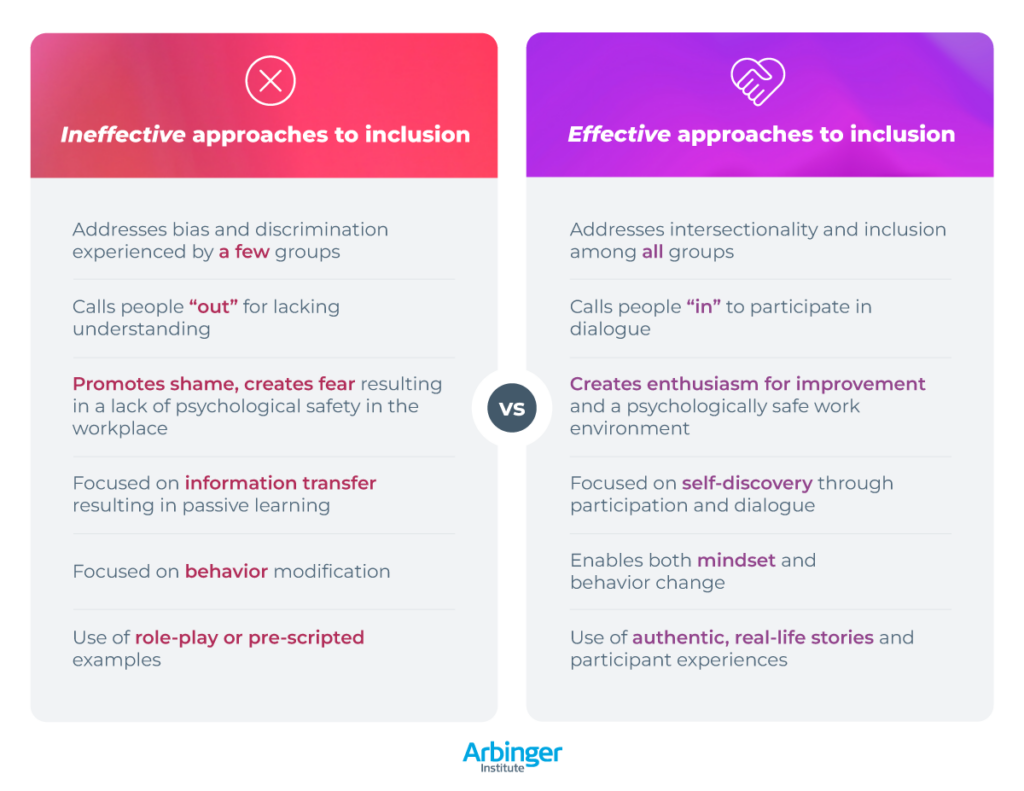
Mindset, mindset, mindset. It all comes back to mindset. In order to really achieve diversity, equality, and inclusion, corporations need to focus on changing the mindsets of employees. It takes genuine collaboration and commitment for DEI programs to work. Unsuccessful DEI training tends to overlook and sometimes even foster the inward mindsets of individuals. When DEI training sessions simply correct behaviors without explaining why with reasons participants can understand, employees are likely going to walk away from sessions thinking this: “I can’t say or do this because it will get me fired.” Good DEI programs encourage outward mindsets that focus on fostering trust and collaborating in a work environment. By shifting training to focus on the needs and emotional well-being of others, people are more likely to walk away from DEI training sessions thinking this: “I shouldn’t do or say this because it will make my coworkers feel unsafe and uncomfortable.” Changing the mindsets of individuals and how they respond to DEI training is the only way DEI programs can succeed in effective and meaningful ways. And by integrating these values subtly into daily practices, corporations can limit or eliminate biases found on both individual and systemic levels.
Ideas or plans for DEI initiatives aren’t good or bad in themselves. It’s the different ways that people go about implementing them that result in the varied impacts and effects on workspaces. Though many programs fail, the other successes show that effective DEI programs are possible: they require genuine employer and employee involvement and must work to foster outward mindsets instead of simply changing behavioral issues.